You can access the full policy in:
(English) NEAR’s position on localisation
(Spanish) NEAR’s política de localisation
(French) NEAR’s politique de localisation
(Arabic) سياسة التوطين لدى شبكة NEAR
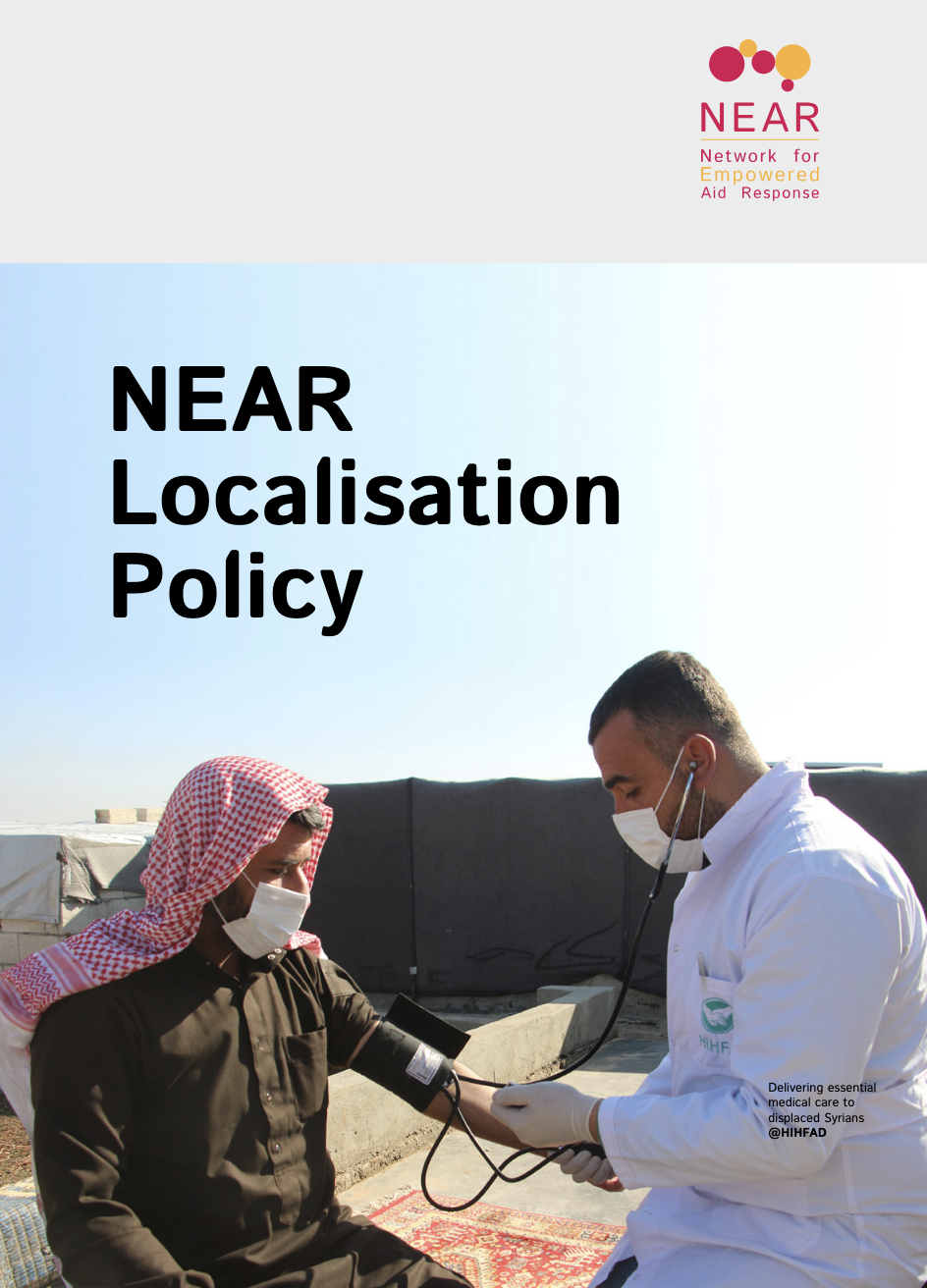
NEAR’s Localisation Policy
Localisation is a central issue for us as it is essential to our vision and our mission. We see localisation as a solution to the current challenges faced by the humanitarian system when responding to the needs of people affected by crises.
In this policy note, we set out NEAR’s definition of localisation and the change we believe is necessary to better meet the needs of people in crises.
We are a movement of local and national non-governmental organisations (NGOs) from the Global South rooted in our communities who share a common goal of a fair, equitable and dignified aid system. We aim to contribute to the movement of civil society actors and help civil society’s aspirations.
As a movement of Global South NGOs, we work to improve the daily lives of our communities through humanitarian response, peacebuilding and development. Our mission is to reinvent aid through innovative ideas, knowledge sharing, and influencing. We represent a subset of Global South NGOs and do not claim to speak on behalf of all Global South NGOs and actors or local communities.
“NEAR’s vision: A world where local communities have the resource and agency to address the challenges that impact them.”
This policy note has two purposes. First, it informs NEAR’s collective work, providing a clear definition of localisation and a clear policy direction for NEAR’s existing and future members on the change the network is advocating for. We also acknowledge that as a network of diverse members and partners, context-specific definitions of localisation are necessary and useful. Members will know best when to use this policy note and when to adapt it to their own contexts and realities.
What is localisation?
NEAR defines localisation as a process of changing the way support to communities is designed, funded and delivered where local response systems have the agency and resources they require to support communities before, during and after crises. Localisation aims to make aid more effective, sustainable and more able to meet the needs of people affected by crises. Localisation is also a process of challenging power within the existing aid system with the objective of putting local response systems at the heart of supporting communities. Localisation is a solution to current sectoral challenges anchored in the belief that shifting power to local actors and rebalancing roles towards local systems of response will enable better support to communities.
Second, the policy note outlines the change NEAR believes is necessary to create an effective global system of solidarity and support rooted in local communities that is fair, equitable and dignified. At a time when many donors and organisations in the Global North are setting their own policies on localisation, we hope this policy note will act as a compass to drive change in the right direction.