
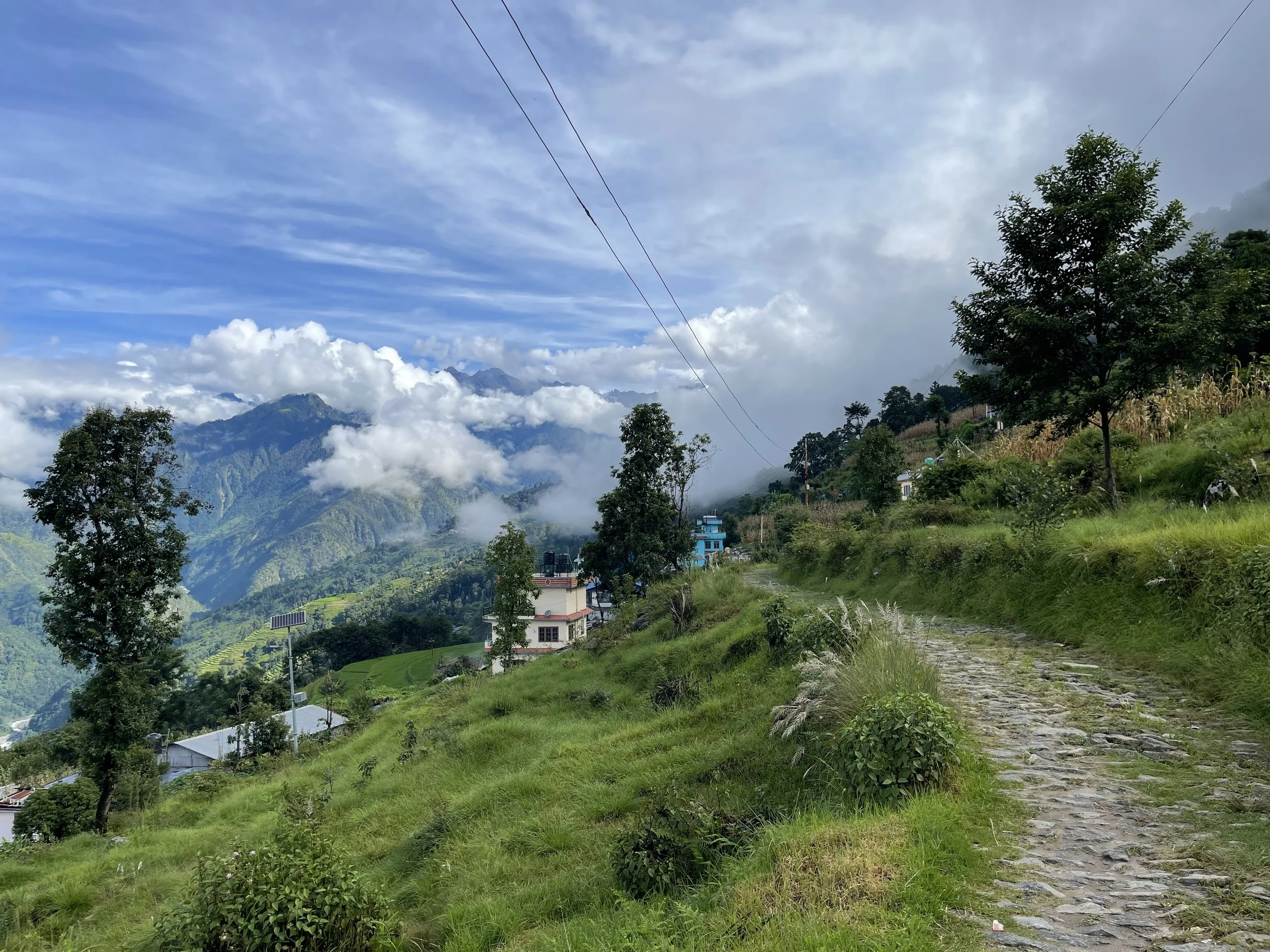
CORE FUND - Nepal’s Fund for Resilience, Building Resilience in the Heart of the Himalayas
by Surya Narayan Shrestha, Vrinda Dar and Falastin Omar
Nepal ranks among the world’s most disaster-prone countries. Sitting on the collision line of the Indian and Eurasian tectonic plates, it is acutely vulnerable to earthquakes, while its steep terrain, heavy monsoon rains, and rapidly changing climate trigger recurring floods and landslides. The 2015 Gorkha earthquake, which killed nearly 9,000 people and displaced millions, was a stark reminder of the country’s fragility.1 Beyond the devastation, it unleashed more than 21,000 landslides, cutting communities off from vital services and exposing the deadly link between seismic activity and fragile mountain slopes. Every monsoon since has reinforced the same message: disasters here are seasonal, cyclical, and intensifying.2
Institutions like the National Society for Earthquake Technology–Nepal (NSET) have long sounded the alarm. “Frequent disasters are part of our lives; we must learn to live with them”, says Surya Narayan Shrestha, Executive Director of NSET.
Foundation of the Nepal Resilience Fund (CORE)
It is from this backdrop that the Nepal Resilience Fund – CORE was launched in 2023, as one of the first locally led pooled fund mechanisms in the country. Governed by a consortium of Nepali NGOs and rooted in national systems, the fund is designed to push decision-making and resources closer to the people who live with risk every day.
CORE’s structure reflects that ambition: an Oversight Committee leads on grant decisions, while an Advisory Committee provides strategic guidance and advocacy. This design deliberately balances the urgent needs with the long-term, ensuring flexible funding for rapid response while also planning for sustained resilience. Its financial base stretches from government contributions to diaspora networks, tapping into a diverse mix of local and international solidarity.
As Surya put it: “CORE isn’t just about getting money to communities faster. It’s about changing who gets to decide how resilience is built”
Visiting CORE-Funded Communities
The principles that guided the foundation of CORE, local leadership, shared governance, and solutions grounded in lived realities, came to life during our visit to Panch Pokhari Thangpal in Sindhupalchowk. What had been articulated as a model on paper was visible in practice, communities leading preparedness, recovery, and risk reduction efforts with support from their municipalities and local organisations.
One of the most striking aspects of the visit was observing landslide mitigation work at Dada Tole community of Panch Pokhari Thangpal Rural Municipality, where residents were building and maintaining gabion box structures with galvanized iron mesh. These rectangular wire cages, filled with local stones, act as flexible retaining walls that stabilise fragile slopes, protect rural roads, and reduce erosion. Their porous design allows water to drain through, preventing the buildup of hydrostatic pressure, a major cause of slope failure during Nepal’s monsoon season.
In a context where heavy rains and earthquakes continually destabilize hillsides, gabions are both practical and effective. They are low-cost, make use of abundant local materials, and can be constructed by communities with basic training, making them a sustainable solution that fits Nepal’s terrain and hazard profile.
Although gabion walls are a modern engineering solution, what made the initiative particularly powerful was how communities have integrated them with longstanding local practices. Alongside the stone-filled cages, residents plant Amriso.3 traditional methods that Nepali farmers have used for generations to hold soil and reduce erosion. In this way, modern structures and indigenous knowledge reinforce each other, showing how resilience in Nepal is built through a combination of technical inputs, local wisdom, and community action.
For Makhmali, a 50-year-old widow living on a hillside in Panchpokhari Thangpal, this blend of approaches has meant the difference between fear and hope. “My house completely collapsed during the 2015 earthquake. We used all our savings to rebuild, but every monsoon I feared it would be swept away again,” she recalled. With CORE’s support, gabions were built and the slopes reinforced with vegetation. “Now, when I look at the hills around my home, I feel something I haven’t in years: safety and hope.”
Visiting CORE-Funded Communities
In Panch Pokhari Thangpal, the field visits revealed how resilience is lived and practiced across different communities. At Dada Tole, community groups gathered for an open meeting where farmers, women, and youth discussed everyday challenges and shared solutions.
The conversations spanned from sustaining organic farming and widening local markets to safeguarding common resources like water supply schemes, practical strategies that showed how resilience is embedded in daily life. A few wards away in Khalanga, we observed how this same spirit of preparedness is institutionalized. At the Disaster Risk Reduction (DRR) Learning Center, community members and local officials came together to exchange knowledge and coordinate plans.
ommunity-led simulation exercises brought these systems to life, as households and volunteers rehearsed how they would respond to potential emergencies. Watching families practice drills underscored the confidence that grows when preparedness is not abstract but owned by the people themselves.
Across these engagements, the essence of CORE’s vision was evident. Resilience is not delivered from outside, it is built from within. Whether through slope stabilization with gabions, the integration of traditional vegetation practices, preparedness drills, or collective planning at the DRR Learning Center, the communities of Panch Pokhari Thangpal are showing that when people closest to the risks are in the lead, solutions are more relevant, inclusive, and sustainable.
Sustaining Resilience Through Governance and Community Alignment
LNNGOs are developing projects that both respond to immediate community needs and build into local municipal priorities as well as national resilience plans. This alignment ensures that initiatives supported by CORE are not stand-alone efforts, but part of a broader framework of disaster risk reduction and recovery.
In Panch Pokhari Thangpal, this was evident in the way community-led organizations and municipal representatives worked together. LNNGOs mobilize communities, provide training, and deliver mitigation activities, while municipalities contribute planning frameworks, policy direction, and accountability systems. This collaboration anchors projects in local governance structures, reinforcing disaster risk management provisions within municipal development plans and connecting them to national strategies.
Such integration is essential for sustainable resilience. Physical measures, like landslide mitigation and preparedness drills, are maintained and scaled when they are embedded into local government planning and budgeting. At the same time, people’s resilience grows as communities see their active participation reflected in municipal strategies and national commitments. This combination of local ownership and institutional accountability creates solutions that endure, making resilience not just reactive, but systemic and long-term.
The impact of this unison is clear: LNNGOs and governance structures working together create solutions that are relevant, legitimate, and enduring. Local leadership and participation brings depth and inclusivity to projects, while alignment with municipal and national systems guarantees that they are sustained beyond individual project cycles. This dual anchoring, community ownership on one side and institutional accountability on the other, is what allows CORE-supported initiatives to move from reactive responses to a foundation for systemic, long-term resilience.
Conclusion
For communities perched on one of the world’s most active seismic belts, the question is never if another disaster will come, but when. Structural vulnerabilities, from rapid urban expansion to fragile infrastructure and deep socio-economic divides, magnify the impact of every shock. Against this backdrop, CORE’s emphasis on community-led preparedness and recovery responds directly to lived experience, recognizing that local institutions and governance are the first responders and the backbone of resilience.
Therefore, establishing the Nepal Resilience Fund-CORE was never just about financing. It was about reshaping the system so that communities are leaders of their own recovery. What is emerging is not just faster response, but a deeper shift: local solutions that endure beyond a single project, blending technical inputs with indigenous practices, and transforming resilience from a reactive posture into a collective way of life.