
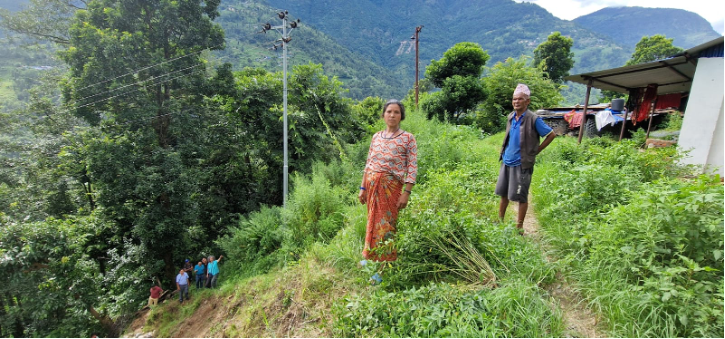
Makhamali, near her home in Panchpokhari Thangpal in the Sindhupalchok district of North Nepal
Makhmali is a 50-year-old widow living in the mountainous municipality of Panchpokhari Thangpal in the Sindhupalchok district of North Nepal. Her two children live and work away from home. In 2015, when the devastating Gurkha earthquake struck, Makhmali lost nearly everything. Her home collapsed, and along with it, her livelihood.
With determination, Makhmali pieced her life back together. Yet new challenges arose. Because her home sits on the top of a hill, she faces a constant threat: landslides triggered by increasingly heavy rains. Over the past years, severe monsoons have eroded the surrounding slopes, placing her house, as many other homes in the area, at great risk of being swept away.
“My house completely collapsed during the 2015 earthquake. We received a small grant from the government and added all our hard-earned savings to rebuild the house. The thought of losing my home yet again to another disaster is terrifying”, says Makhmali
Through the support of the CORE Fund, NSET, a Nepali organisation, stepped in to support Makhmali to protect her home. Drawing from both tradition and modern techniques, they strengthened the hillside, placing blocks of stone wrapped in wire mesh to create protective barriers, and planting varieties of trees that bind the soil and prevent it from sliding during heavy rains.
Now, when Mahmali stands outside her home and looks at the hills around her, she feels something she has not felt in years: safety. Hope. The knowledge that her home will stand firm, even as the rains return.
Through the CORE fund, not only was Makhmali’s house protected but awareness was raised amongst her community members on the risks of landslides and on how to better protect their homes through preventive and early action measures. Together with its local partners, NSET further contributed to strengthening local government systems, protocols and procedures in Disaster Risk Reduction, including hazard risk mapping and monitoring, establishing an Early Warning System, (EWS) and equipping a resource centre for eventual relief and rescue operations.
“Thanks to the awareness being raised on natural hazards, like earthquakes and landslides, and our municipality that is taking preventive measures, the people of my village and many other villages in nearby mountains now feel better prepared to face the risks of natural disasters our area faces.”, says Makhmali
Now, for the first time in many years, Makhmali feels her home—and her future—can be safe. And with a proactive and better prepared municipality, the community feels better protected from eventual disasters.
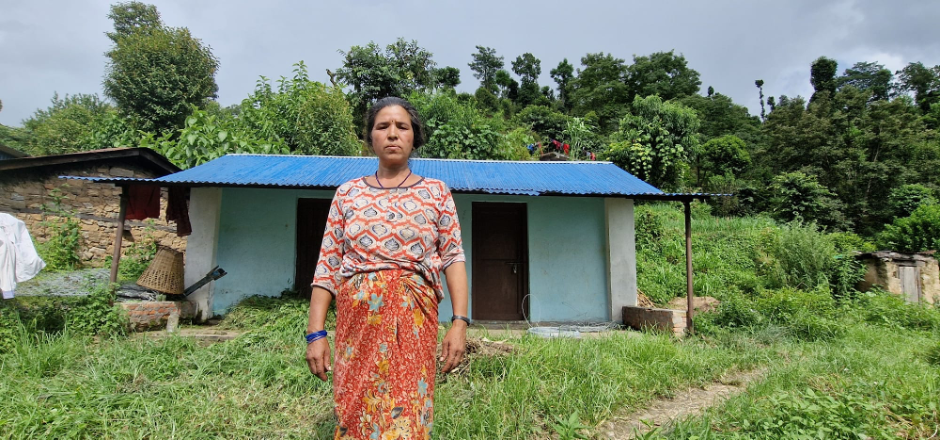
This is the story of one woman. But it is also the story of resilience, of community preparedness, of a local government that cares for its people and of how the smallest acts of preparedness, and system strengthening for early action can protect not only a house, but save many lives.
Read more about CORE Fund - Nepal’s Resilience Fund here.